
Carrying the key does not settle ownership
Record who handed you the item, who carries it and what you agreed to do with it. That information lets you resume a scene without turning a loan into loot merely because it appears in your notes.
DnD Dynamic Sheet includes notes in a local Windows character sheet. This guide proposes text you can write there or on paper; it assumes no inventory ownership fields, automatic returns or permissions between players.
One key, four facts and one pending decision
Original fictional case: Nara the innkeeper lends Ivo the storeroom key to fetch blankets. You agree to lock up and return it before the evening bell. At the session’s end, Ivo still carries the key and you have not played its return.
A useful note for this case would be:
| Detail | Example text |
|---|---|
| Origin | Nara lent the storeroom key |
| Current carrier | Ivo holds it at the session’s end |
| Agreement | Lock up and return before the evening bell |
| Confirmed status | Return has not been played yet |
Do not write “returned” because the party intends to do it. Nor “we keep the key” if nobody decided that. Next session can start with a concrete question: “Do we return the key now, or is something unresolved first?” The table chooses the answer.
Update only what happened
If Ivo hands the key to another party member, change the confirmed carrier while preserving origin and agreement. If it returns to Nara, record the return after playing it. If nobody remembers who carries it, ask before completing the note; “carrier awaiting confirmation” is an option.
For another item, distinguish a loan, gift and entrusted delivery according to what you agreed in the fiction. A borrowed cloak does not become a gift after one session. No new rules are needed: this activity organises what your table has established.
Do not infer combat statistics or magical effects from the note. If the item has rules, consult the source and version your group uses. “Storeroom key” in this example supplies narrative information only; it grants no mechanical advantage.
A short note you can find again
Use a recognisable heading such as “Loan: Nara’s key” and keep current status beside the agreement. This is an editorial convention, not an app-specific search or automation. Before sharing a screen or copying notes, choose which information belongs in view.
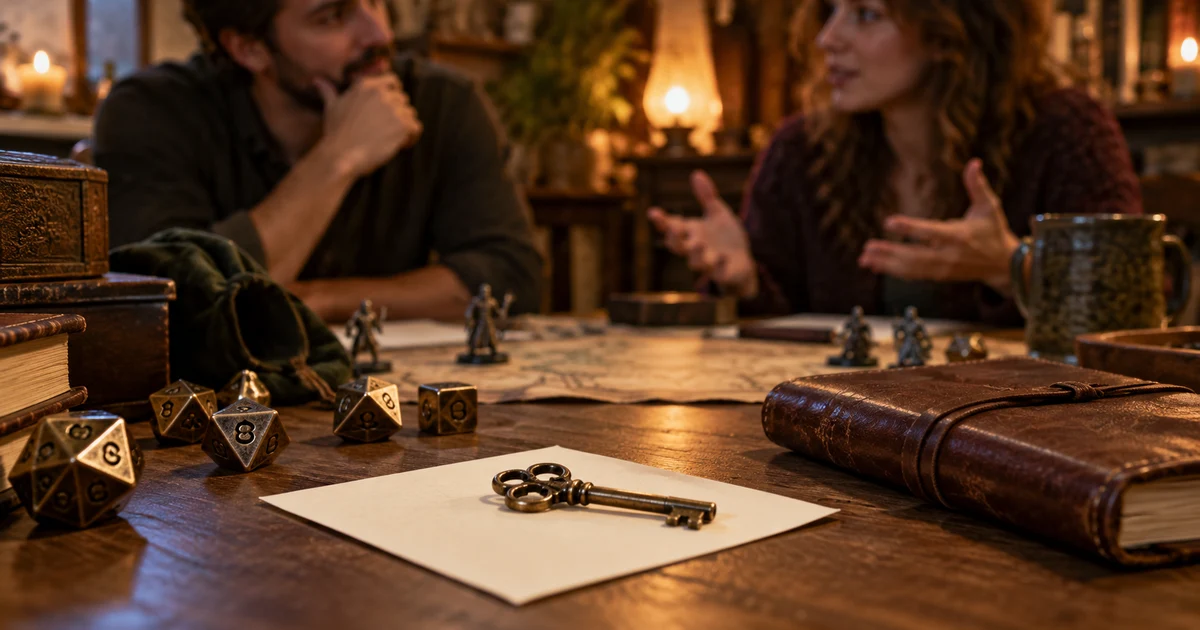
DnD Dynamic Sheet is a Windows x64 beta with notes, spells and session tracking; it is neither a shared tabletop nor a campaign manager. Consult the product reference and current presentation for purchase and availability. The cover illustrates a fictional key on a table.