
Eleven damage does not mean DC 11: check the Concentration save
Damage, DC and saving throw are different numbers: examples with 11 and 23 damage under D&D 2024 and manual sheet notes.

DnD Dynamic Sheet blog.
Damage, DC and saving throw are different numbers: examples with 11 and 23 damage under D&D 2024 and manual sheet notes.

A 2024 D&D example: nine Fire damage becomes four with Resistance, even with two sources. Check the calculation before updating Hit Points.
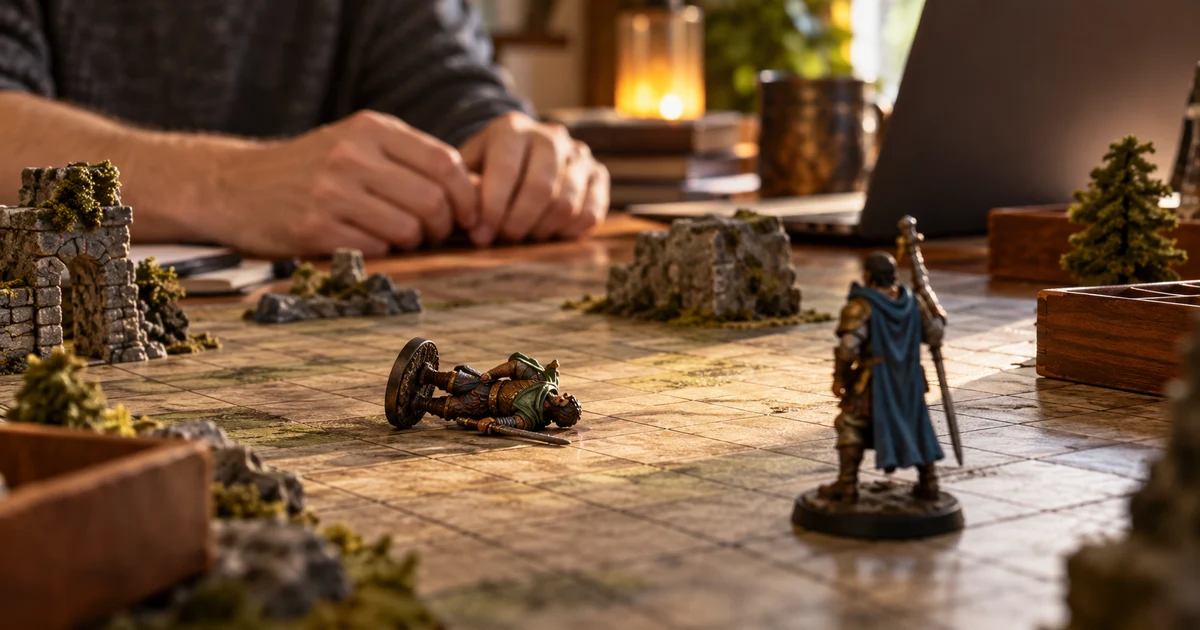
Calculate the cost of standing from Prone under D&D 2024: half your Speed, not half your remaining movement. A worked character-sheet example.

Two 2024 D&D examples for tracking Reaction recovery: your turn’s start, a round boundary and a manual character-sheet note.

A ten passes the roll but does not heal: a three-turn example and separate manual tracking of HP, successes and failures under the 2024 D&D rules.

For a D&D 2024 ability check, compare the total with the DC. A 20 + 3 example separates that check from an attack critical.

Prepare a source-and-status change log before using your sheet at a new level, without assuming automation or applying another edition’s rules.

A tabletop routine for noting an equipment change, confirming its effect and checking the sheet without inventing DnD Dynamic Sheet automation.
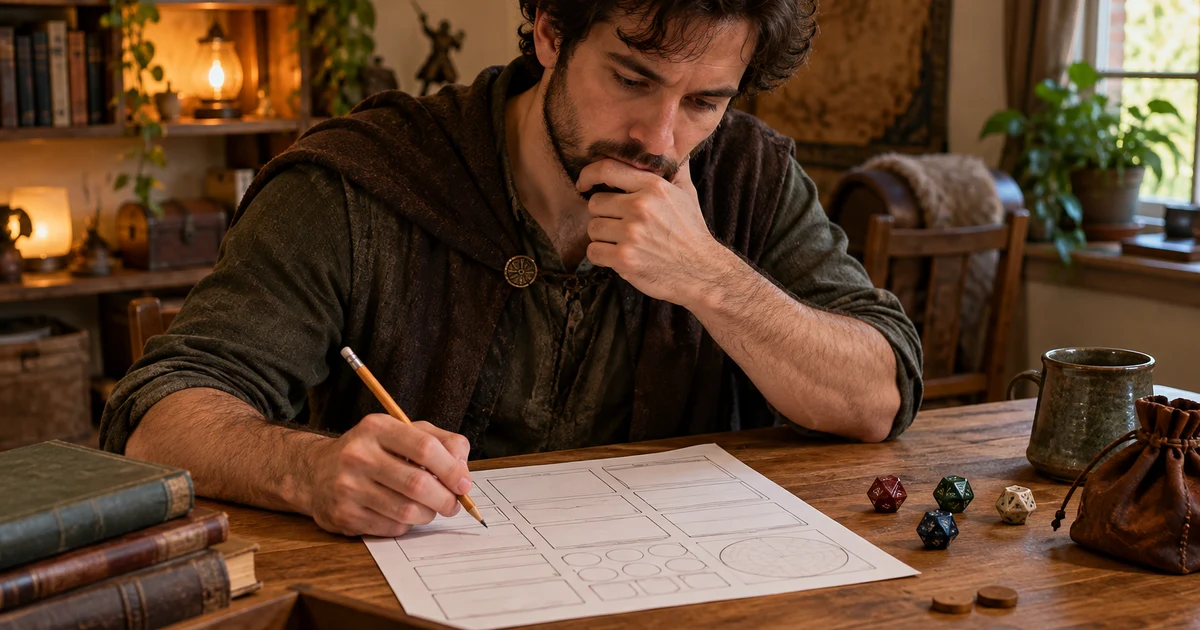
A worked arithmetic example for checking a skill with proficiency or Expertise before comparing it with DnD Dynamic Sheet.

Concentration in 2024 D&D with two hypothetical effects: when the first ends and what to record manually without assuming sheet automation.

A check with a 12, +3 modifiers and DC 15 explains why meeting the target is enough. Separate die, total and difficulty without inventing automatic sheet rules.
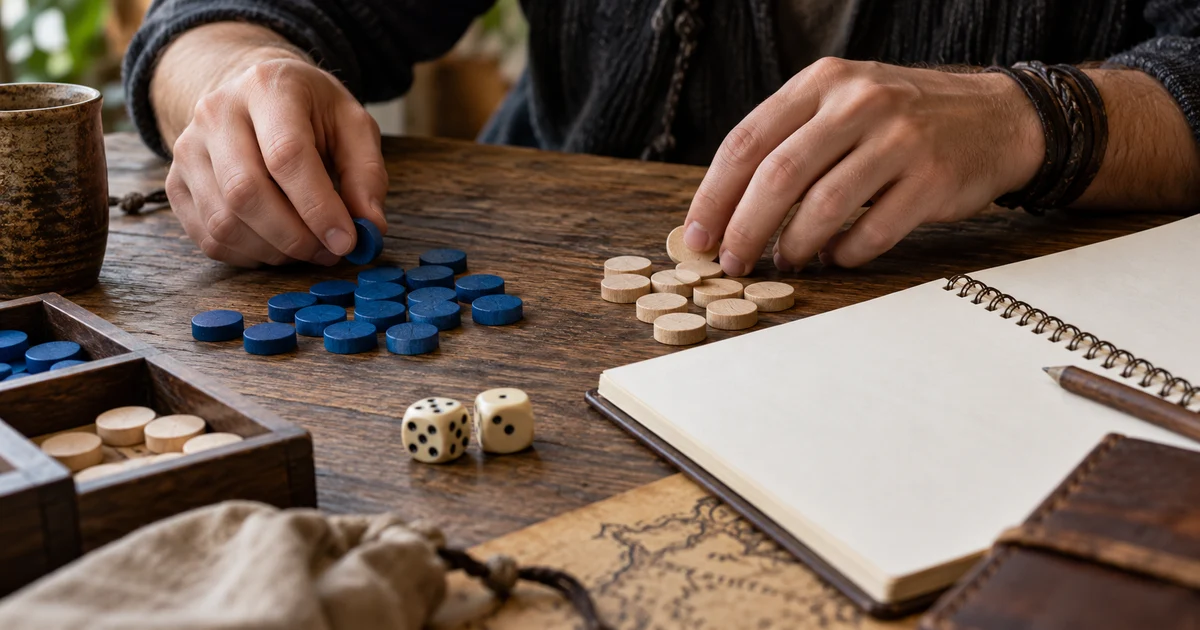
A six-and-eight example separates temporary Hit Points, damage and healing under the 2024 free rules, without promising automation.

A Dexterity saving throw and an Acrobatics check can use different bonuses. A 2024 rules example explains what to check before updating your character sheet.

Separate base speed from movement remaining after two confirmed segments. A manual calculation for updating the sheet without changing the wrong value.

An Advantage example with two d20s and a +3 modifier. Separate the chosen die, the total and the base value retained on your sheet.
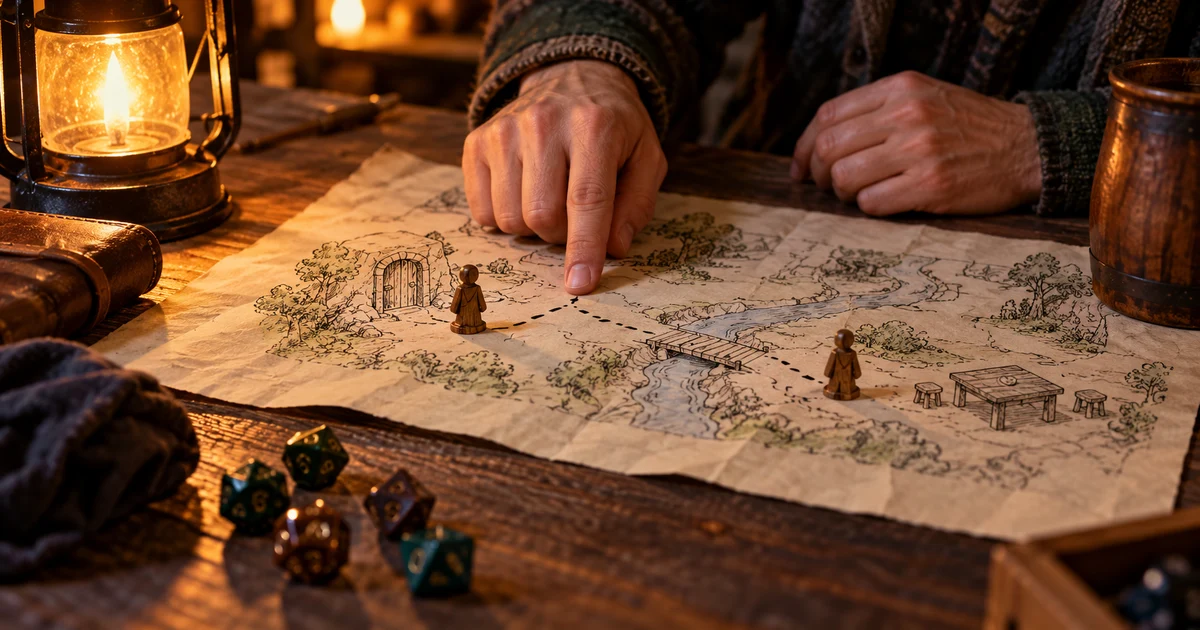
Reaching a point three metres away and returning uses six in this example. Plan movement by segments and check your table’s rules.
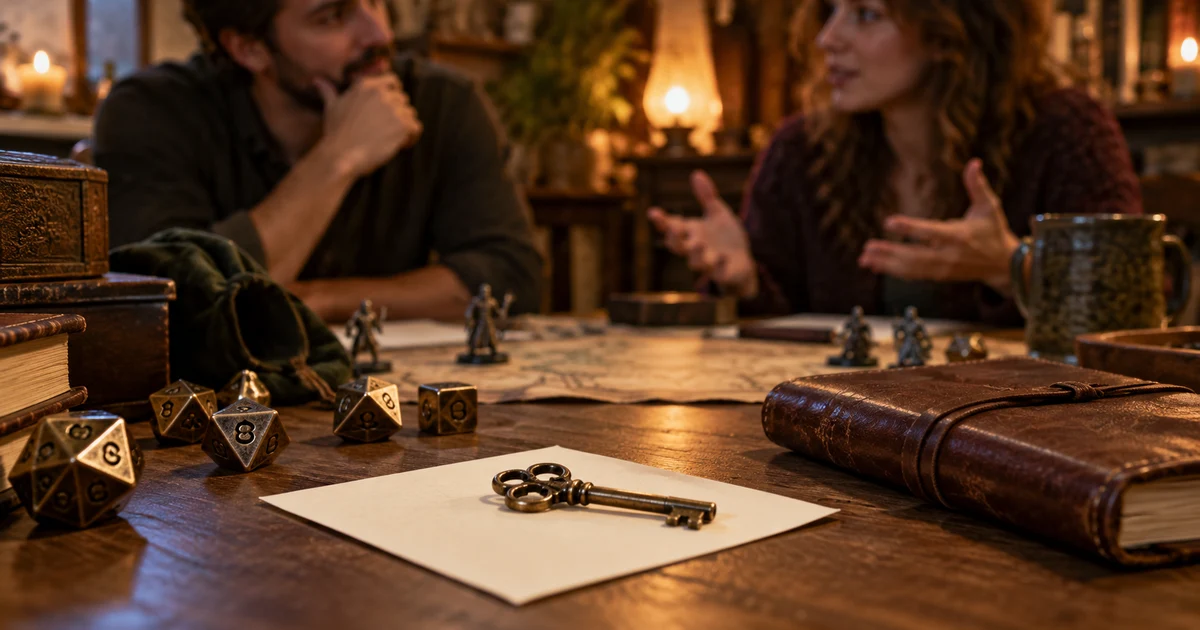
Do not turn a loan into loot: prepare a note of origin, carrier, agreement and return with a roleplaying example ready to resume.

Prepare three sentences to introduce a character and separate their secret from what you share with the group. An external storytelling activity.

Turn a portrait detail into a playable question without imposing a character’s past. An original example for portraits and notes in DnD Dynamic Sheet.

Prepare a DM question about an untrained skill check, separate permission to attempt an action from the applicable bonus, and keep a clear character note.

Set a counter with current value, maximum and verified recovery. An invented example separates the number from your table’s rule.

Prepare two turn options in your notes, then record what happened. A closed-door example that keeps the character sheet separate from rules adjudication.
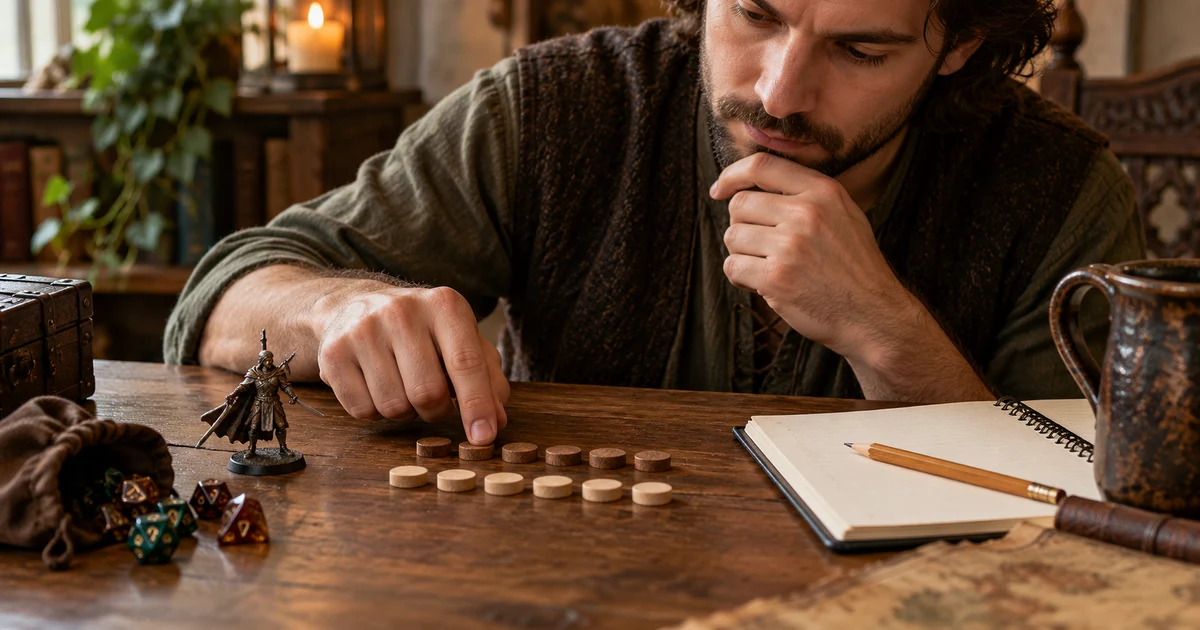
Reconcile hit points and table notes without applying the same change twice or assuming automatic rules in the sheet.

A catalog can mix descriptions and metadata. Prepare a spell reference, agree the rules edition and check limits before the session.

An arithmetic example separates calculation components from a fixed total when reviewing a character sheet, with references and DnD Dynamic Sheet’s boundaries.