
Three metres there does not mean three metres for a return trip
In this guide’s example you have 9 metres of movement, travel 3 to approach and another 3 to return. You have used 6 and have 3 left. Distance to the destination and total distance travelled answer different questions.
This is neither a universal D&D Speed nor a proposed house rule. It is a simple assumption: ordinary ground, walking and no additional effects or circumstances. Confirm your character’s Speed, distances and applicable rules with your table before using it in play.
Plot both legs
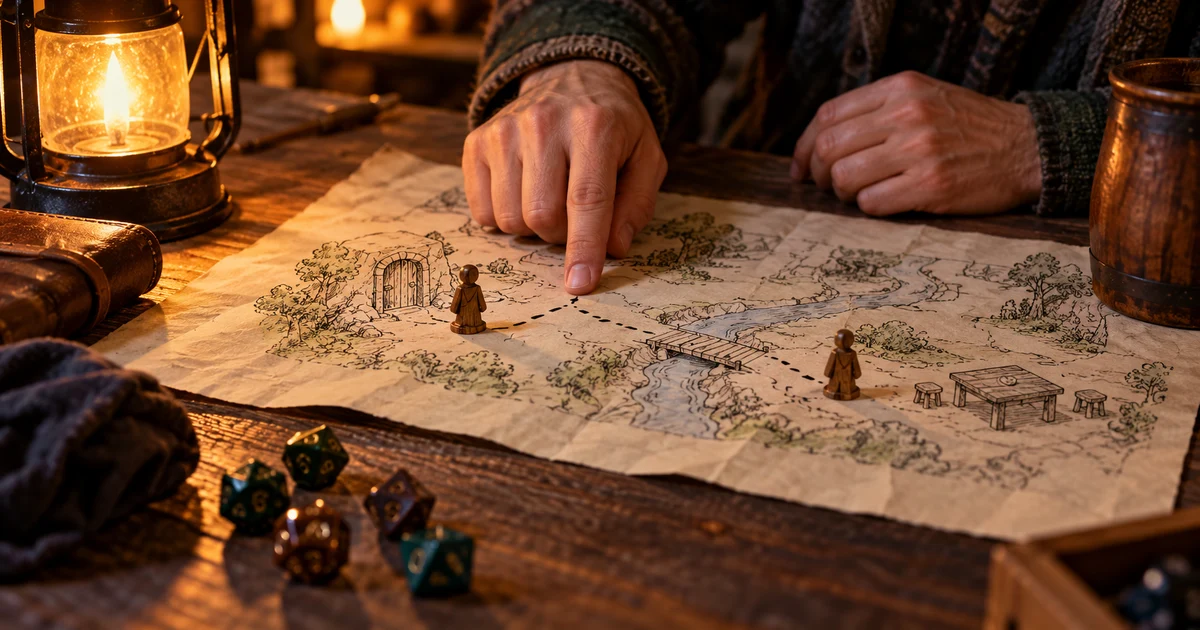
Imagine Lera, a fictional character standing by a door. A table with a letter lies three metres away along a clear path. This exercise covers approaching and returning; it does not assume that the letter is collected or settle what action that requires.
| Movement segment | Metres spent on segment | Metres remaining under our assumption |
|---|---|---|
| Door to table | 3 | 6 |
| Table to door | 3 | 3 |
The letter does not change the journey’s arithmetic. If you stay at the table, only the first segment happened. If you take a longer route back, count the actual route instead of automatically deducting another three.
Separate a proposed route from completed movement
Before moving, write “out 3; back 3; planned total 6.” After the first segment, record what happened. Do not spend the return segment as well if you subsequently choose to stay.
The official 2024 Basic Rules explain that each part of a move is deducted from available Speed. Different movement modes and circumstances have their own rules. This table does not resolve difficult terrain, diagonals, opportunity attacks, Dash or conditions; check those when they apply.
Put the appropriate information in your sheet
DnD Dynamic Sheet includes movement, turn actions and notes in a local Windows x64 sheet. This guide proposes preparing and checking the route. It does not claim the application calculates map routes or automatically applies all those rules.
Check your movement value and keep a note of segments when useful. If part of the turn has happened, preserve that rather than replacing it with an unplayed intention. The planned-versus-completed turn guide explores that distinction.
The public facts describe the available beta and purchase licence. This is a character sheet, not a shared virtual tabletop. Paper is enough to try the example: fix the allowance, trace each segment and check what remains before choosing another move.